3 Reasons to Cut Added Sugars Out for Better Heart Health
Health
March 4, 2026
10 min
Jenna Ehteshami, MS, MPH, RD, LD
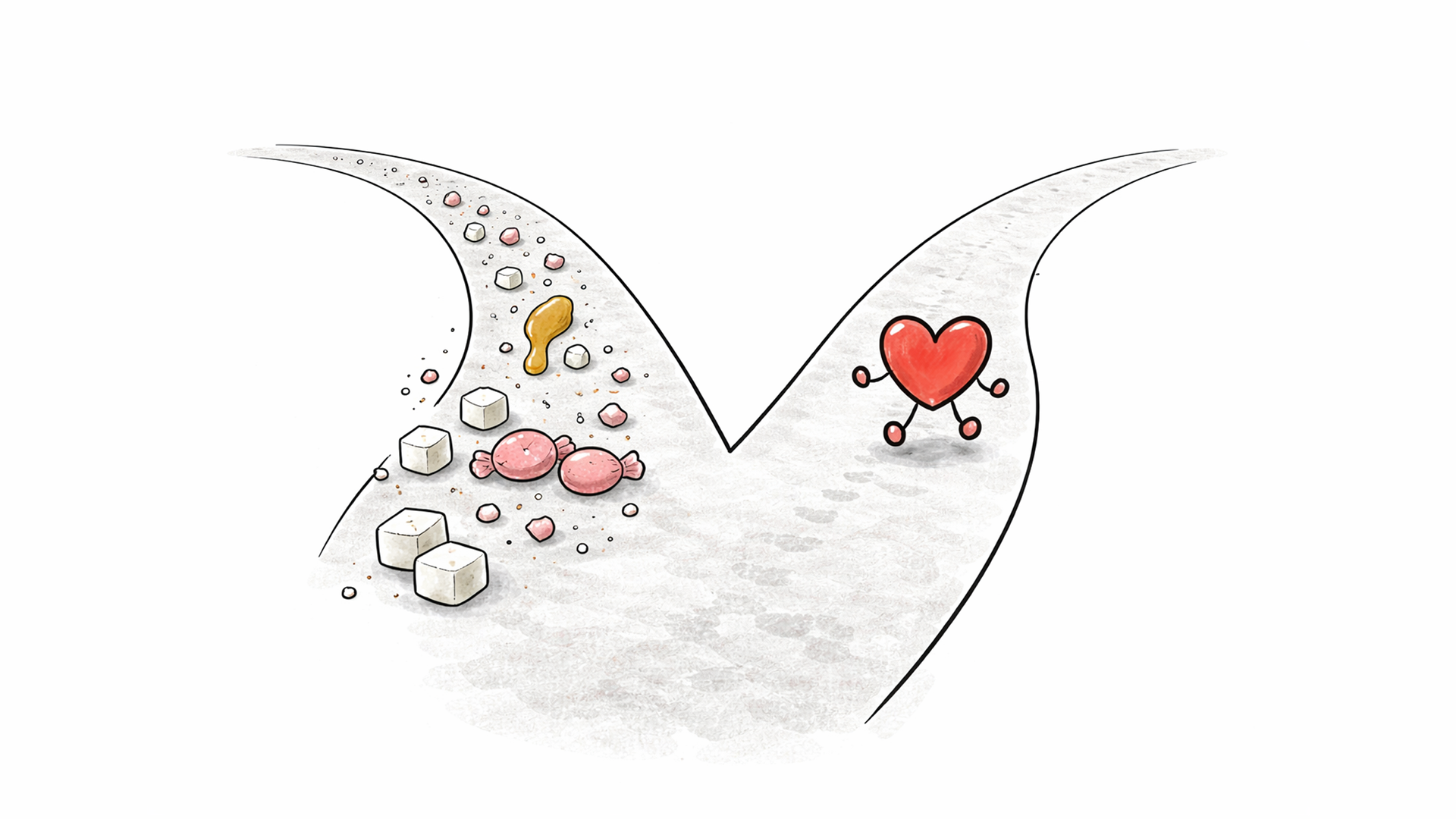
When we think about "clogged arteries," we usually picture greasy burgers and butter. But for people living with diabetes, there is a hidden culprit that is just as dangerous for your cardiovascular system: added sugar.
While your body uses some glucose for energy, the highly processed sugars found in sodas, flavored yogurts, and packaged snacks do more than just spike your blood sugar. They launch a direct attack on your heart.
Here are three science-backed reasons to slash added sugars to protect your heart.
1. Sugar Lowers Your "Good" Cholesterol
Most people focus on lowering their "bad" LDL cholesterol, but having high "good" HDL cholesterol is just as important. HDL acts like a magnet, scrubbing your arteries and carrying cholesterol back to the liver to be processed.
The Sugar Effect: Diets high in added sugars have been shown to lower HDL levels and increase triglycerides, a type of fat in your blood.
The Heart Risk: When your HDL levels are low and your "blood fats" (triglycerides) are high, your risk for heart disease skyrockets, even if your LDL looks normal.
2. It Damages Your Blood Vessel "Lining"
Your blood vessels are lined with a delicate layer of cells called the endothelium. Think of this like the non-stick coating on a frying pan; it keeps blood flowing smoothly and prevents clots.
The Inflammation Connection: When you consume excess sugar, your body produces inflammatory molecules. Chronic high sugar intake causes "oxidative stress," which acts like sandpaper on that non-stick coating.
The Result: This damage makes it much easier for cholesterol to stick to your artery walls, leading to the buildup of plaque (medically called atherosclerosis). By cutting sugar, you allow your blood vessels to stay flexible and smooth.
3. Excess Sugar Becomes "Sticky" Fat
When you consume more sugar than your body can use for immediate energy, your liver has to figure out what to do with the excess.
The Conversion: The liver converts excess sugar into fat. Some of this fat stays in the liver (leading to fatty liver disease), but much of it is released into the bloodstream as VLDL (Very Low-Density Lipoprotein).
Small and Dense: Sugar-heavy diets lead to the creation of "small, dense LDL" particles. Unlike large, fluffy cholesterol particles, these tiny ones are much more likely to get trapped in your heart's tissue and cause a blockage.
How to Spot "Hidden" Heart-Hunters
Sugar often hides under aliases on food labels. To protect your heart, look out for these terms in the ingredients list:
High Fructose Corn Syrup
Maltodextrin
Evaporated Cane Juice
Barley Malt
Agave Nectar
Quick Check: How Much Do You Know About Sugar and Your Heart?