


When you are living with diabetes and working toward a weight loss goal, regular physical activity is one of the most powerful tools in your toolkit. Every time your muscles contract during exercise, they act like a sponge, pulling glucose straight out of your bloodstream to use for energy. But when summer arrives, the heat index can turn an otherwise pleasant daily walk into an exhausting, sweaty chore.
For many people, high summer temperatures introduce a frustrating paradox: you know you need to move to manage your blood sugar and weight, but the intense heat makes outdoor exercise feel miserable. Furthermore, if you are carrying extra weight or managing chronic joint pain from osteoarthritis or neuropathy, high-impact activities in the summer heat can cause your joints to feel stiff, swollen, and painful.
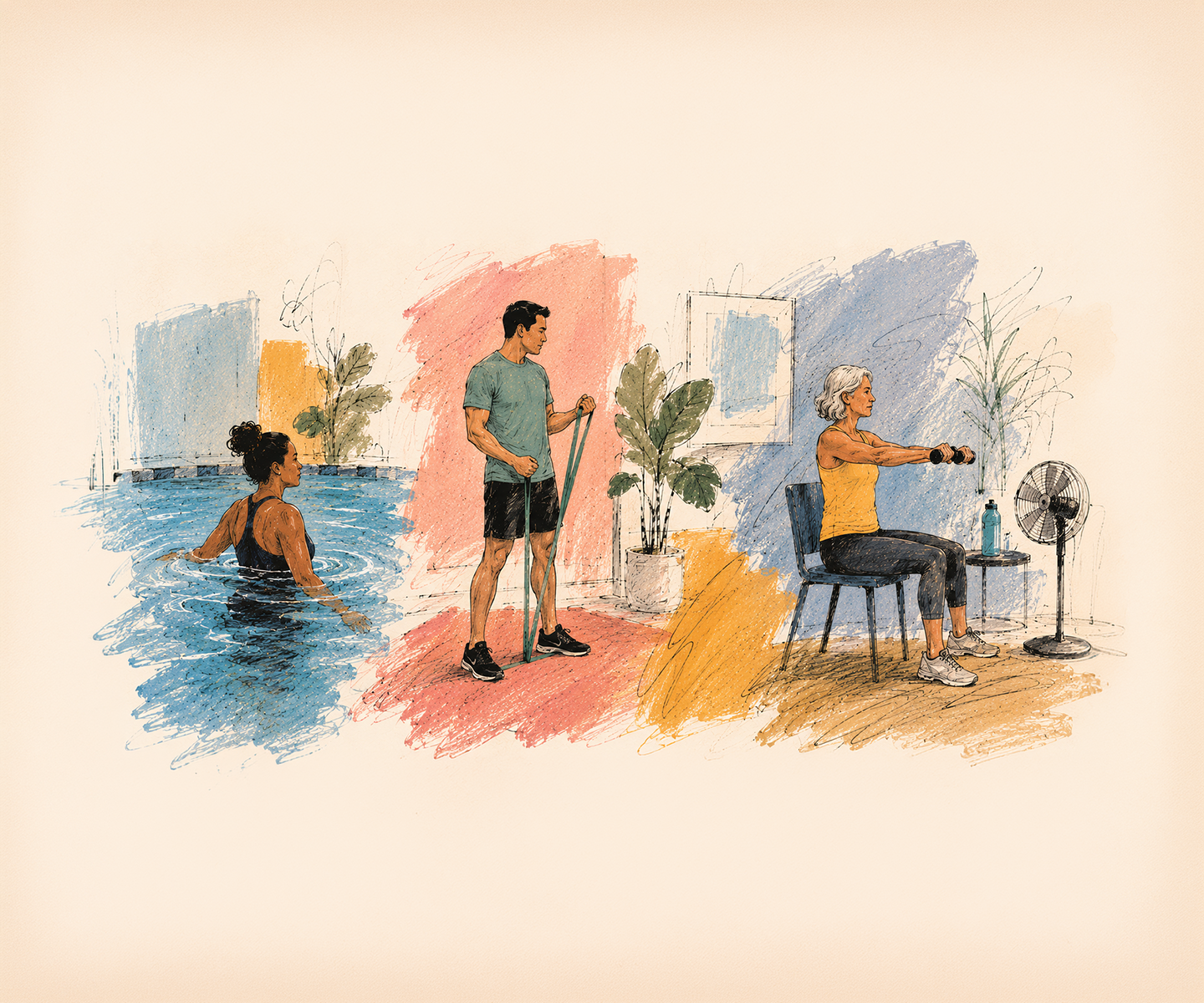
If your exercise routine has taken a hit lately, don't throw in the towel until autumn. You don't need to stop moving; you just need to adapt. Here are three joint-friendly, diabetes-conscious ways to take your workouts indoors and underwater for ultimate summer success.
If you have never utilized a pool for exercise, summer is the perfect time to start. Water is an absolute miracle worker for anyone managing diabetes, weight loss, and joint pain simultaneously.
When you submerge your body up to your chest in water, the natural property of buoyancy bears up to 90% of your body weight. This means the chronic pressure on your knees, hips, and lower back virtually disappears. You can perform movements in a pool that might feel impossible or incredibly painful on solid pavement.
At the same time, water provides continuous resistance. Every time you move an arm or a leg underwater, you are working against a force that is more resistant than air. This creates a highly effective, low-impact cardiovascular and strength workout that burns calories and lowers blood sugar without aggravating sensitive joints.
You don't need to swim traditional laps to get a great pool workout. Try these low-impact water exercises next time you visit a local pool:
When we think of building muscle for weight management, we often picture lifting heavy dumbbells or navigating confusing gym machines. But building muscle mass is crucial for diabetes: skeletal muscle is your body’s primary storage site for glucose. The more active muscle mass you have, the higher your metabolic rate and the easier it is to keep your fasting blood sugars stable. During the dog days of summer, traveling back and forth to a crowded gym can feel overwhelming. This is where resistance bands become your best friend.
Resistance bands are lightweight, inexpensive elastic bands that allow you to perform strength training right in the comfort of your air-conditioned home. Unlike heavy weights, which exert a constant downward force due to gravity, resistance bands provide "variable resistance" that you can control. This means the exercise gets harder only as the band stretches, which is significantly gentler on your joints and tendons while still forcing your muscles to work.
Purchase a set of loops or resistance bands with handles (they often come in a variety of colors indicating light, medium, and heavy resistance). Try this quick, joint-friendly living room circuit:
You do not need an expensive gym membership or an outdoor trail to get your daily steps in. When the thermometer climbs into the 90s or 100s, your living room can easily transform into a private, climate-controlled fitness studio.
The goal of summer living room exercises is to maintain consistency without overheating. When your body gets too hot, it releases cortisol (the stress hormone), which can actually cause an artificial spike in your blood sugar. Exercising directly under a ceiling fan or in an air-conditioned room keeps your heart rate stable and ensures your workout remains a positive, health-promoting experience.
Clear a small space in front of your television or couch and try these low-impact, joint-safe options:
