

For many people, the word "exercise" can feel like another chore on an already long to-do list. It often conjures up images of grueling morning and evening gym sessions, expensive equipment, or pushing your body to the point of exhaustion.
But if we look at the science of metabolic health, the goal isn't intensity, it’s consistency. We want to influence how our cells use energy and make them more efficient, effectively boosting our body’s metabolism. Physical activity is perhaps the most powerful tool we have for increasing insulin sensitivity. When you move, your muscles can take up glucose even without extra insulin, acting like a natural sponge for blood sugar.
We are presenting SMART goals this month focused on different topics in each blog post. SMART goals are a simple way to set clear, realistic goals that are easier to follow and achieve than broad or vague goals. SMART is an acronym that stands for:
S – Specific
The goal clearly states what you want to do.
M – Measurable
The goal includes a way to track progress.
A – Achievable
The goal is realistic and doable based on your current situation.
R – Relevant
The goal matters to your health and fits your personal needs and priorities.
T – Time-bound
The goal has a clear timeframe.
The secret to long-term success isn't running a marathon (unless you want to!). Instead, we encourage patients to find movement that feels like a gift to your body rather than a punishment. Here is how to build a movement practice that actually sticks as we start 2026.
One of the most common frustrations in diabetes management is the "postprandial spike" or the dreaded sharp rise in blood sugar that happens about 30 to 90 minutes after eating. While medication and diet play their roles, you have a secret weapon: moving your body.
Your muscles are the primary consumers of glucose in your body. By engaging them shortly after a meal, you "activate the furnace" just as the fuel is entering the bloodstream which effectively lowers the impact of that meal/snack on your blood sugar levels.
Pro Tip: If you work at a desk, try a "walking meeting" or simply pace around the house while on a phone call after lunch. If walking isn’t available to you, try some chair exercises or upper arm movements to activate those muscles.
When we think of exercise, we often focus on "cardio" (walking, running, cycling) for highest calorie burn. While cardio is great for your heart, resistance training is the gold standard for long-term glucose management and metabolic rate.
Think of your muscles as storage tanks for sugar. The more toned and active your muscle tissue is, the larger and more efficient your "tanks" become. These “tanks” also pull glucose (sugar) out of the bloodstream and use it for energy which lowers your blood sugar levels and eventually decreases your A1c.
The biggest reason people stop exercising isn't a lack of willpower; it's a lack of enjoyment. If you dread your workout, your brain will eventually find a way to skip it. To make movement a permanent part of your diabetes care plan, you must find your "Joy Factor."
Sustainable movement should be something you look forward to—a way to decompress and reconnect with yourself.
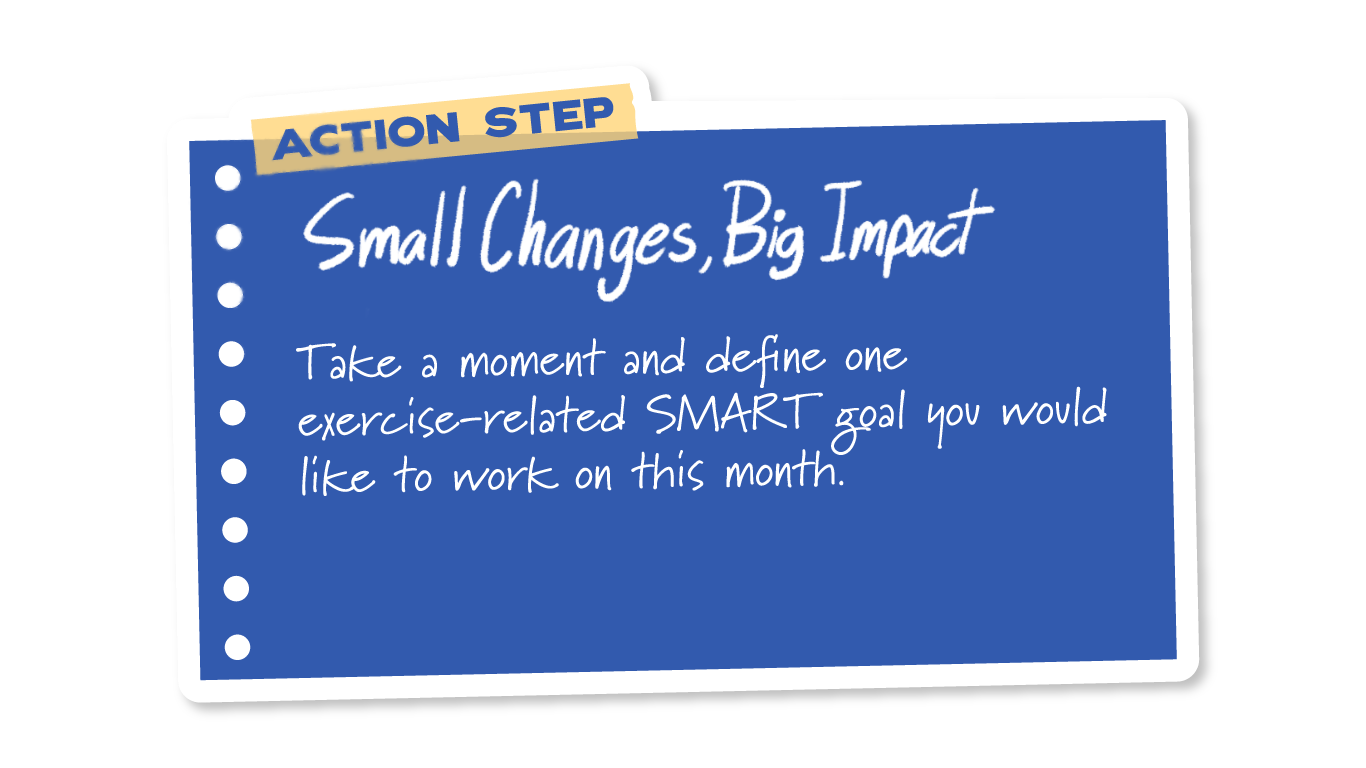
We’ve all said, "I need to start exercising more." Unfortunately, that's a wish, not a plan. To see real changes in your A1c or daily glucose readings, you need a SMART goal—one that is Specific, Measurable, Achievable, Relevant, and Time-bound.
A SMART goal takes the decision-making out of your day. You don’t have to ask "Should I exercise?" because the plan is already written.
Your SMART Goal Example: "I will take a 15-minute brisk walk immediately after lunch on Monday, Wednesday, and Friday to help manage my afternoon glucose levels for the next three weeks."
Breakdown of why this works:
Movement is medicine. It is one of the few things in life that provides an immediate benefit (lower blood sugar today) and a long-term reward (better insulin sensitivity tomorrow). Don't wait for the "perfect" time to start or the "perfect" gym outfit. Start where you are, use what you have, and do what you can.