
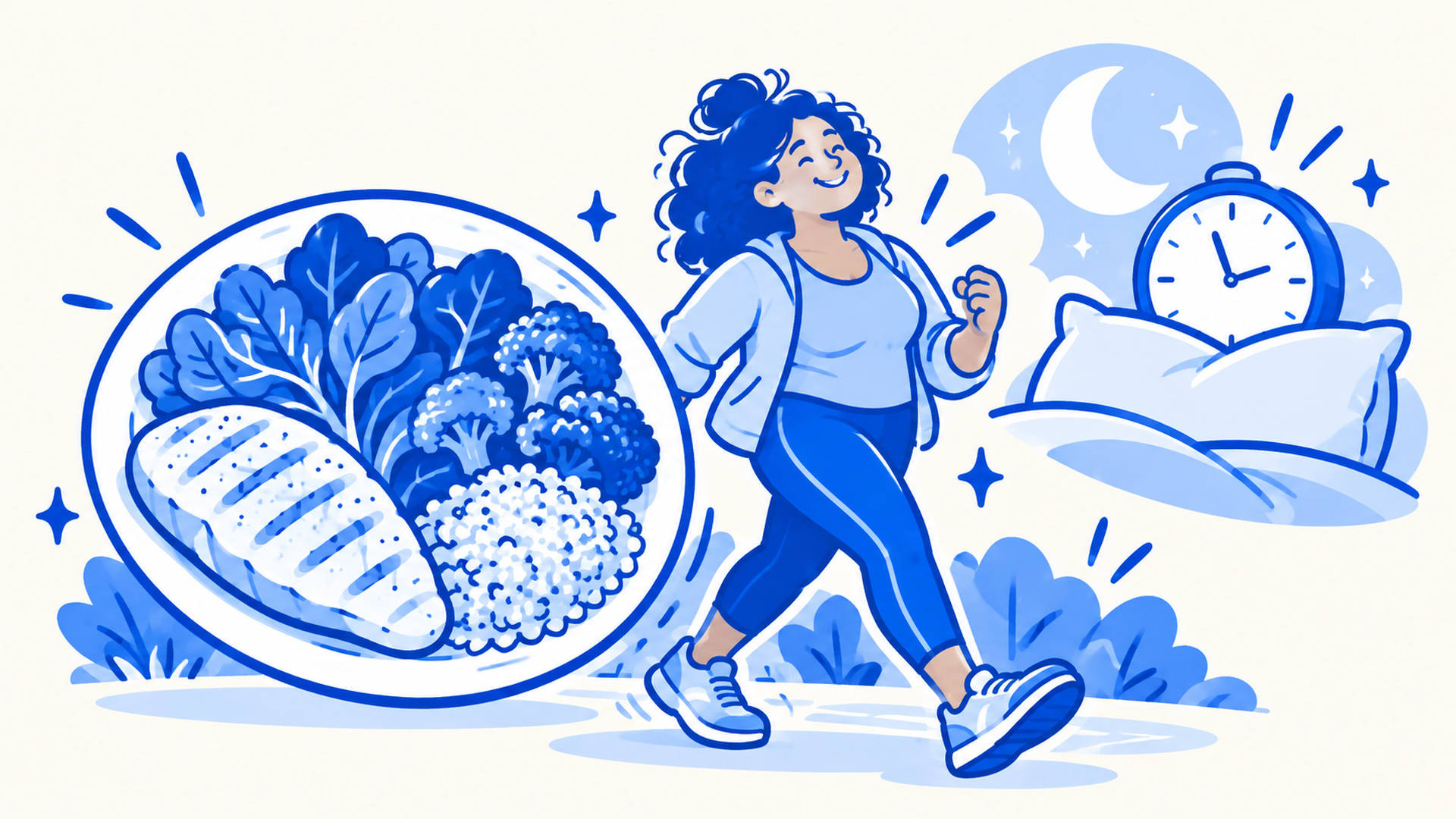


November brings crisp air, changing leaves, and the start of a season centered around gathering and food. It also marks Diabetes Awareness Month which is an ideal time to refocus on your health goals, whether you are aiming to lower your hemoglobin A1c, manage your weight, or reverse type 2 diabetes.
When you think about improving your blood sugar, it’s easy to feel overwhelmed by sweeping, super-intense overhauls: strict diets, grueling workout routines, or eliminating all of your favorite foods. But sustainable metabolic health isn't built on extreme, temporary fixes. It’s created through small, daily choices that add up over time. Your hemoglobin A1c reflects your average blood glucose levels over roughly 90 days. That means the consistent choices you make today lay the foundation for better lab results, more reliable energy, and steady weight loss in the months ahead.
Here are three simple, science-backed daily habits you can start this November to lower your A1c and support healthy weight management without turning your life upside down.
What you eat matters, of course, but the order you eat your food on the plate can have an immediate, powerful effect on your post-meal blood sugar and appetite. When you consume refined carbohydrates or sugars on an empty stomach, your digestive system breaks them down rapidly into glucose, causing a sharp blood sugar spike followed by a heavy insulin release. This "spike-and-crash" cycle triggers midday fatigue, brain fog, and intense sugar cravings just hours later.
Research in metabolic health shows that changing the order in which you consume food on your plate significantly slows down gastric emptying and glucose absorption:
Protein is the most satiating macronutrient. By prioritizing protein and fiber early in your meal, you naturally curb hunger, reduce overall calorie intake without feeling deprived, and minimize the excess insulin circulating in your bloodstream. This creates an environment where your body can burn stored body fat for fuel.
If there were a pill that lowered post-meal blood sugar, assisted with weight management, improved digestion, and boosted mood with zero side effects, everyone would take it. That "pill" is a brief 10-15 walk after eating.
When you sit after a meal, your pancreas has to work overtime producing insulin to clear glucose from your bloodstream into your cells. However, when your leg muscles contract during a simple walk, they activate a process called insulin-independent glucose uptake. Your muscles use specialized transport proteins that pull glucose directly out of your bloodstream to use for immediate energy without needing extra insulin.
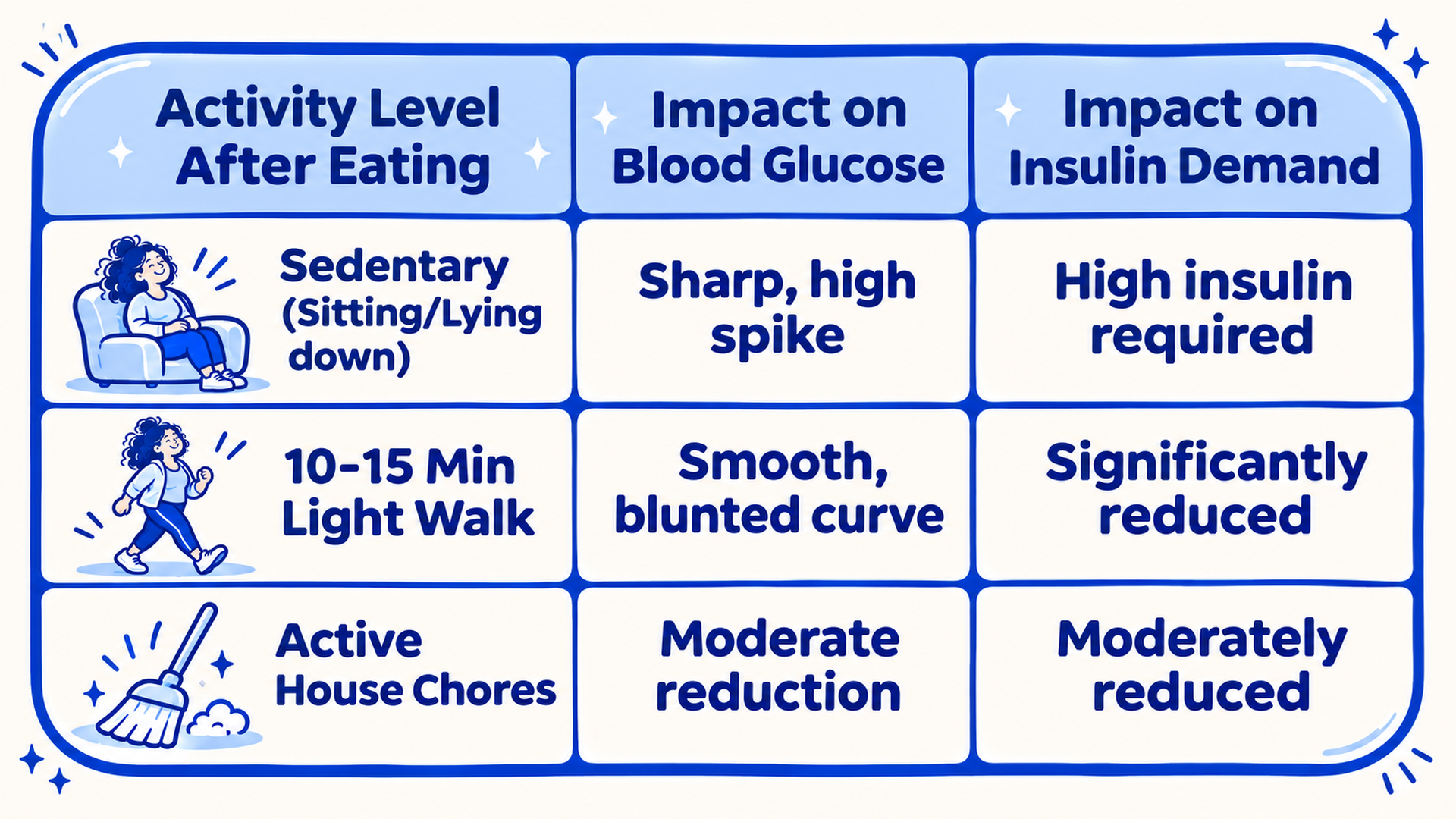
Over time, lowering post-meal glucose spikes through light daily movement directly reduces your overall A1c and helps prevent the hyperinsulinemia that makes weight loss difficult.
In a world filled with late-night snacking and constant access to food, our digestive systems rarely get a true break. Giving your metabolic system a predictable period of rest each night is one of the simplest ways to improve insulin sensitivity.
When you eat late into the evening, your body remains in a storage state while you sleep. High nighttime blood sugar interferes with deep, restorative sleep cycles and keeps insulin levels elevated overnight, preventing fat burn.
A 10-12 hour overnight window is gentle, achievable, and highly effective. For example, if you finish dinner by 7:00 PM, you simply wait until 5:00-7:00 AM or later the next morning before eating breakfast.
