


As the summer heat fades and crisp autumn air sets in, September brings a familiar sense of renewal. Leaves begin to change, sweaters come out of storage, and suddenly, pumpkin spice flavor seems to be in e-v-e-r-y-t-h-i-n-g!
For many people, fall feels like the ultimate "fresh start" season where you can reset routines, tidy up schedules, and do a mid-year check-in on personal goals. But if you live with diabetes and are actively working on weight management, autumn can also present a unique challenge.
Every coffee shop, bakery, and grocery aisle suddenly turns into a maze of high-sugar, high-calorie seasonal temptations. A single medium pumpkin spice latte can pack up to 50 grams of sugar and over 300 to 400 calories. This is enough to send your blood sugar soaring and put a dent in your weight loss progress before breakfast even ends.
Does managing diabetes and weight mean you have to skip out on seasonal joy entirely? Absolutely not. Healthy living isn’t about perfection or total restriction; it’s about strategic balance and intentional choices. With a few smart tweaks, you can enjoy all the warm, comforting flavors of the season with zero added sugar and minimal impact on your blood sugar levels.
When you eat a high-carb treat like a sugary pastry on its own, your digestive system breaks it down very quickly into simple glucose. Without anything to slow it down, glucose rushes into your bloodstream rapidly, causing a sharp blood sugar spike.
Shortly after that spike, your body produces insulin (or if you take insulin, it goes to work), bringing your sugar levels crashing back down. This "sugar crash" doesn't just leave you feeling tired and foggy, it triggers strong hunger signals and cravings for more quick-digesting carbs, making weight management significantly harder. This is what we call the “blood sugar rollercoaster.”
To enjoy autumn treats without the roller coaster, you need to change how your body processes them. You can do this by pairing carbohydrates with protein, healthy fats, and soluble fiber.
The classic pumpkin spice latte (PSL) is the undisputed king of autumn treats. However, standard coffee shop versions are essentially liquid desserts disguised as morning beverages.
Liquid calories and liquid sugars are particularly tricky for diabetes and weight management:
Luckily, you don't have to give up your seasonal morning coffee ritual. You just need to know how to order a sugar-free alternative like a pro.
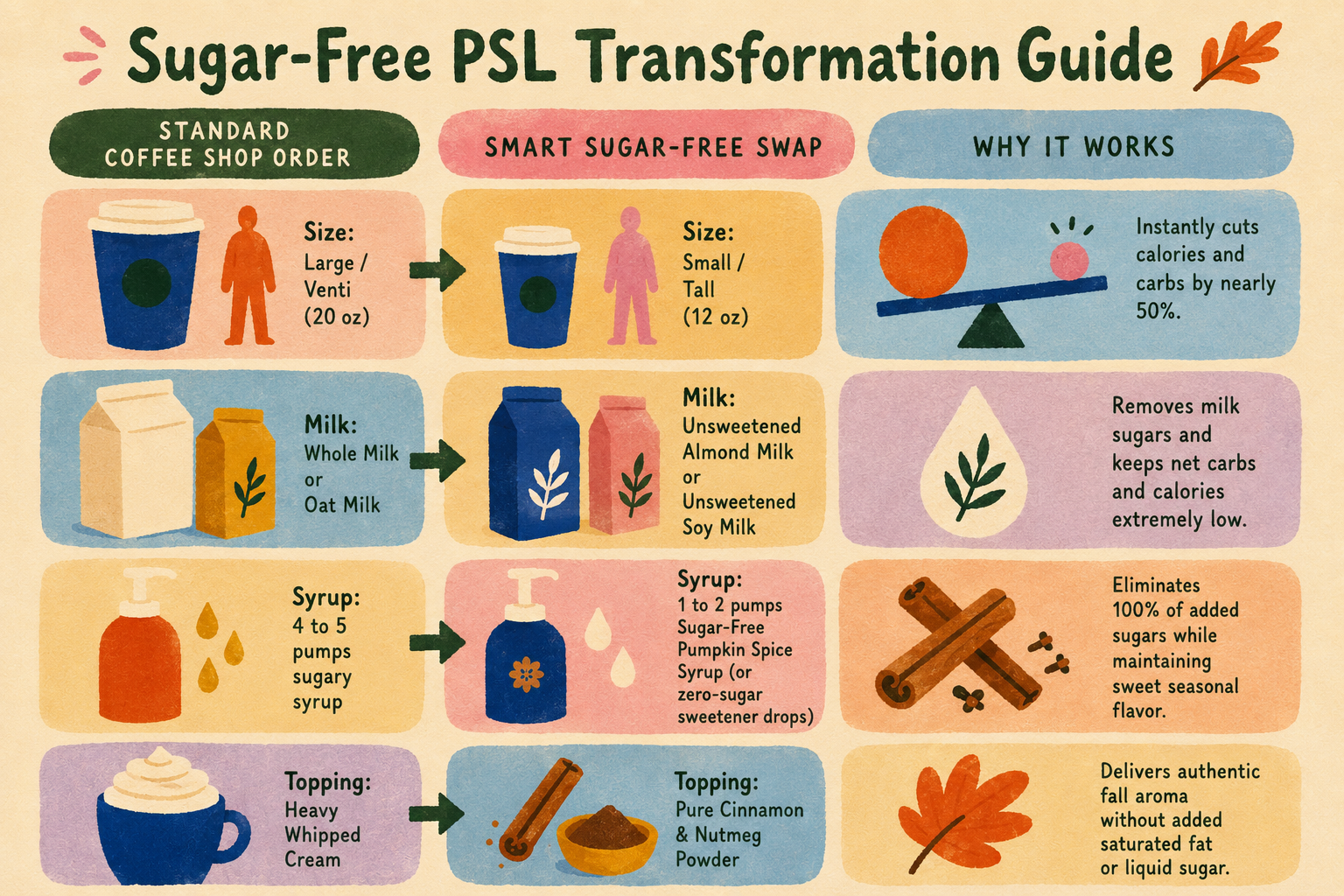
Did you know that the actual "pumpkin spice" flavor doesn't come from sugar at all? It comes from a blend of real spices: cinnamon, nutmeg, ginger, cloves, and allspice. None of these spices contain sugar or calories, and cinnamon has even been shown in some clinical studies to help support insulin sensitivity.
Try asking your barista for an Americano or Cappuccino with unsweetened almond milk, two pumps of sugar-free pumpkin syrup, and extra pumpkin pie spice sprinkled on top. You'll get 100% of the cozy autumn aroma and flavor with zero sugar impact.
September is an ideal month to perform a realistic Goal Check-In. Often, when people start a weight loss or diabetes management plan, they set rigid, high-pressure expectations: "I will never enjoy a cozy drink again," or "I will stick to a strict routine without exception."
The problem with all-or-nothing thinking is that autumn is packed with events like harvest festivals, football tailgates, Halloween parties, and family gatherings. When a rigid diet meets real-life events, a single indulgence often turns into feeling like a "failure," which can lead to abandoning healthy habits altogether until January.
Instead of aiming for 100% perfection, aim for consistency across 80% of your choices, leaving 20% for intentional flexibility.
