
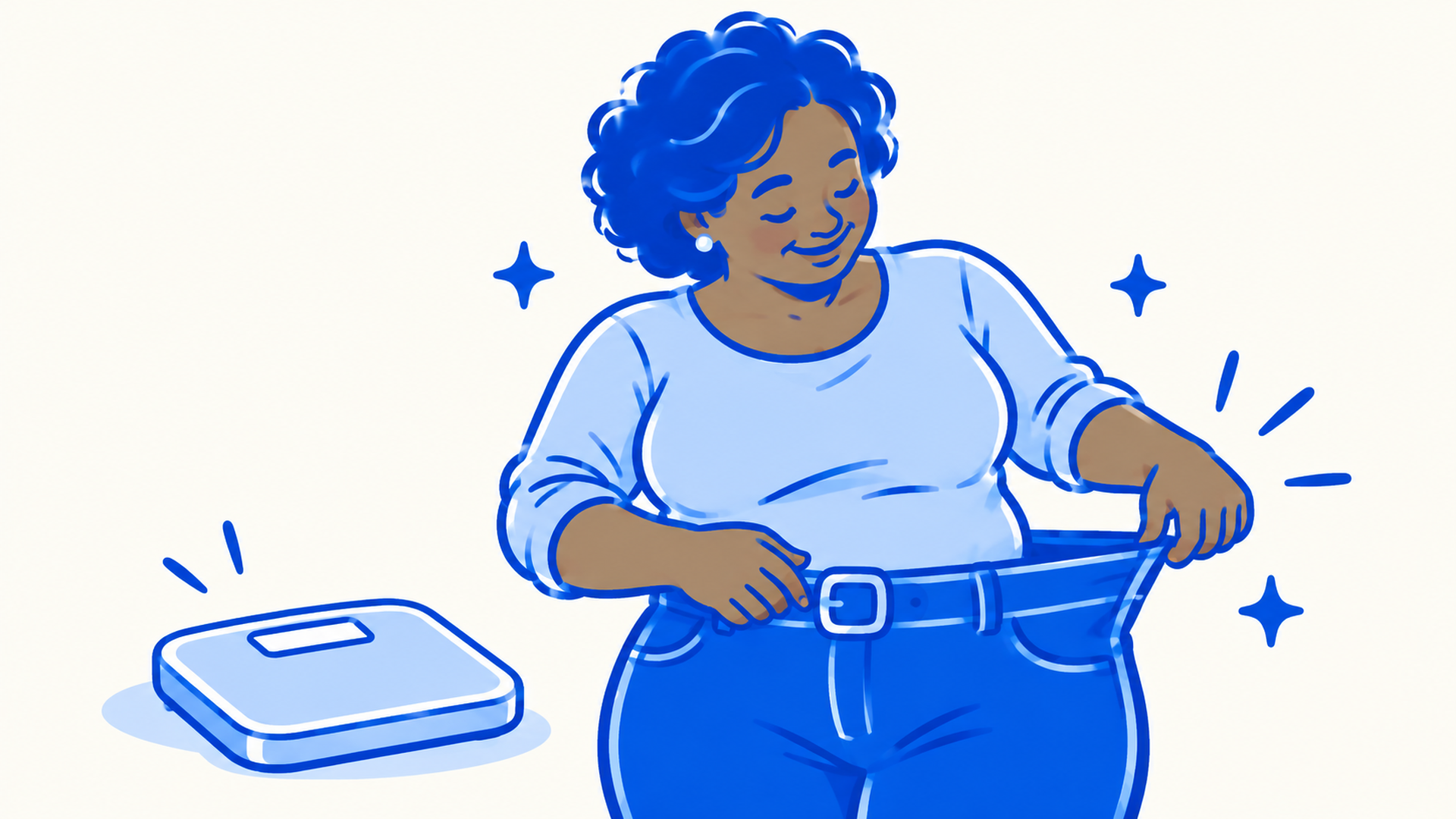


When you set out to improve your blood sugar and lose weight, the bathroom scale is often the first tool you reach for. You step on it in the morning, wait for the digital display to settle, and let that single number dictate your mood, your confidence, and how "successful" your health journey was that week. If you are a Rewind patient working on type 2 diabetes management, reversing insulin resistance, or achieving a healthy weight, relying entirely on the scale can be misleading and deeply frustrating. Weight fluctuates naturally based on hydration, salt intake, inflammation, muscle building, and sleep quality. More importantly, internal metabolic healing often begins long before the scale moves.
When you learn to decode your body's subtle, everyday signals, you gain a far more accurate and encouraging picture of your progress. Here are three powerful, non-scale methods to track your transformation and stay motivated for the long haul.
One of the most immediate indicators of improving insulin sensitivity happens in your brain and daily energy levels. When blood sugar swings rapidly after meals, your body experiences dramatic spikes and sharp drops. The post-meal glucose spike is frequently followed by a heavy insulin release, which causes a rapid glucose crash. This metabolic roller coaster manifests as:
As you follow the Rewind protocol, your post-meal glucose curves smooth out. Instead of a sharp spike and crash, your body experiences gentle, steady energy. You may notice you no longer need an afternoon nap, your focus stays sharp through the workday, and you reach the evening without feeling completely drained. These "energy waves" are a direct physical signal that your cells are processing energy efficiently without flooding your system with excess insulin.
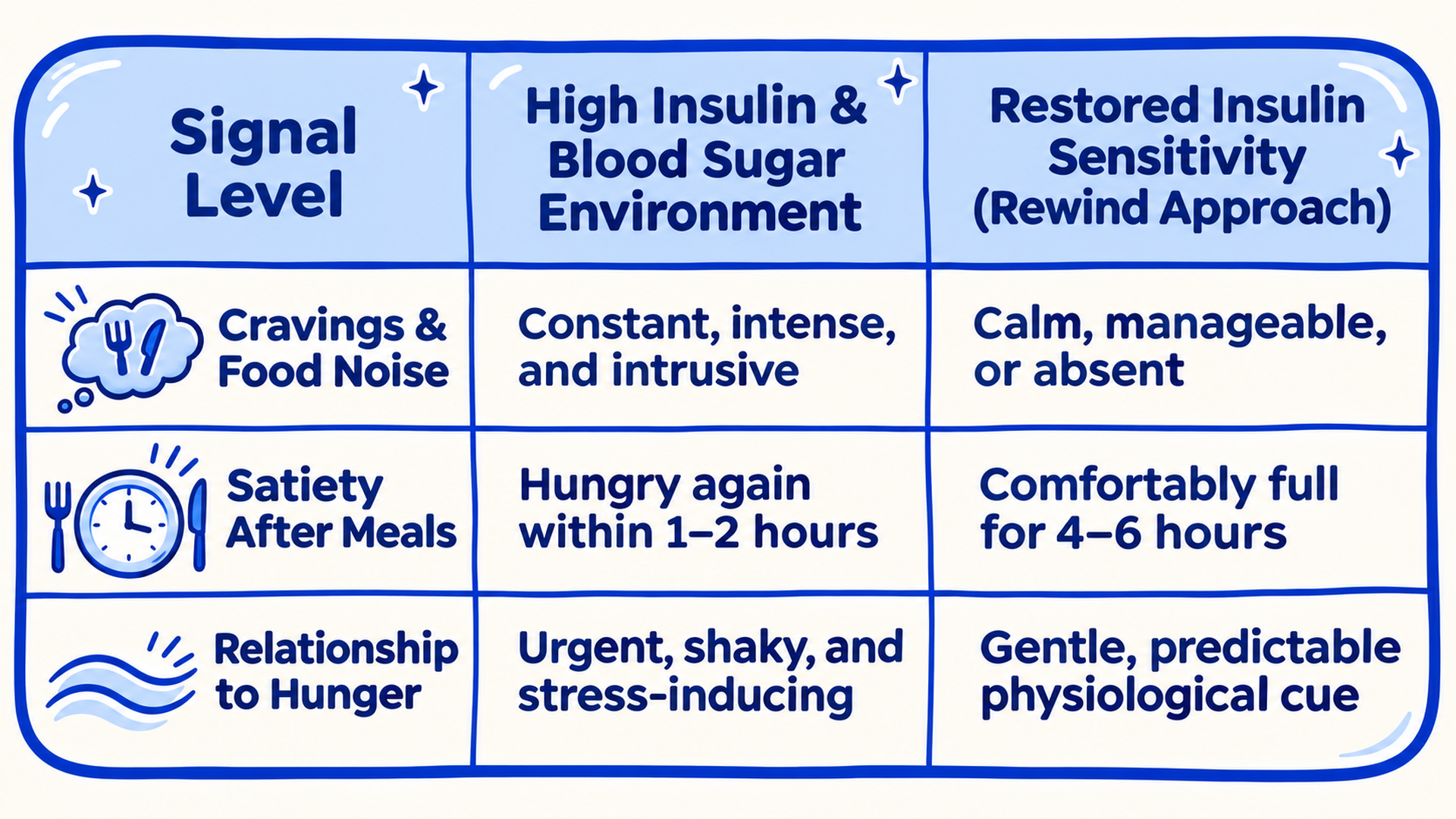
If you have struggled with weight management or blood sugar control in the past, you are likely familiar with "food noise" which is the persistent, intrusive thoughts about food, cravings for sweets, or the constant urge to snack even when you've recently eaten. Food noise isn't a lack of willpower; it is driven by biology. Chronically elevated insulin levels inhibit leptin (your body's fullness hormone) and amplify ghrelin (your hunger hormone). When your body remains stuck in high-insulin mode, it sends constant emergency signals to your brain demanding quick glucose.
As your baseline insulin levels drop and your body recovers its ability to burn stored fat for fuel, food noise quietens down. Pay attention to how long you stay comfortably full after a meal. Going 4 to 5 hours between meals without feeling shaky, anxious, or ravenous is a clear sign that your hormonal satiety signals are resetting and your metabolism is becoming flexible.
When you adopt lifestyle changes that support metabolic health, your body often undergoes recomposition including losing visceral and body fat while preserving or building lean muscle tissue. Because muscle tissue is denser and takes up significantly less space than fat tissue, your physical body shape can change dramatically even if your total body weight remains static on the scale. Instead of stepping on the scale daily, track tangible physical markers that reflect fat loss and muscle retention:
The Big Picture
The scale only measures your relationship with gravity. It cannot measure your insulin sensitivity, your energy levels, your mental clarity, or your long-term health. As you continue your Rewind journey, listen closely to the signals your body is sending you every day. Every stable afternoon, every reduced craving, and every loose belt notch is definitive proof that your metabolic health is moving in the right direction.
